





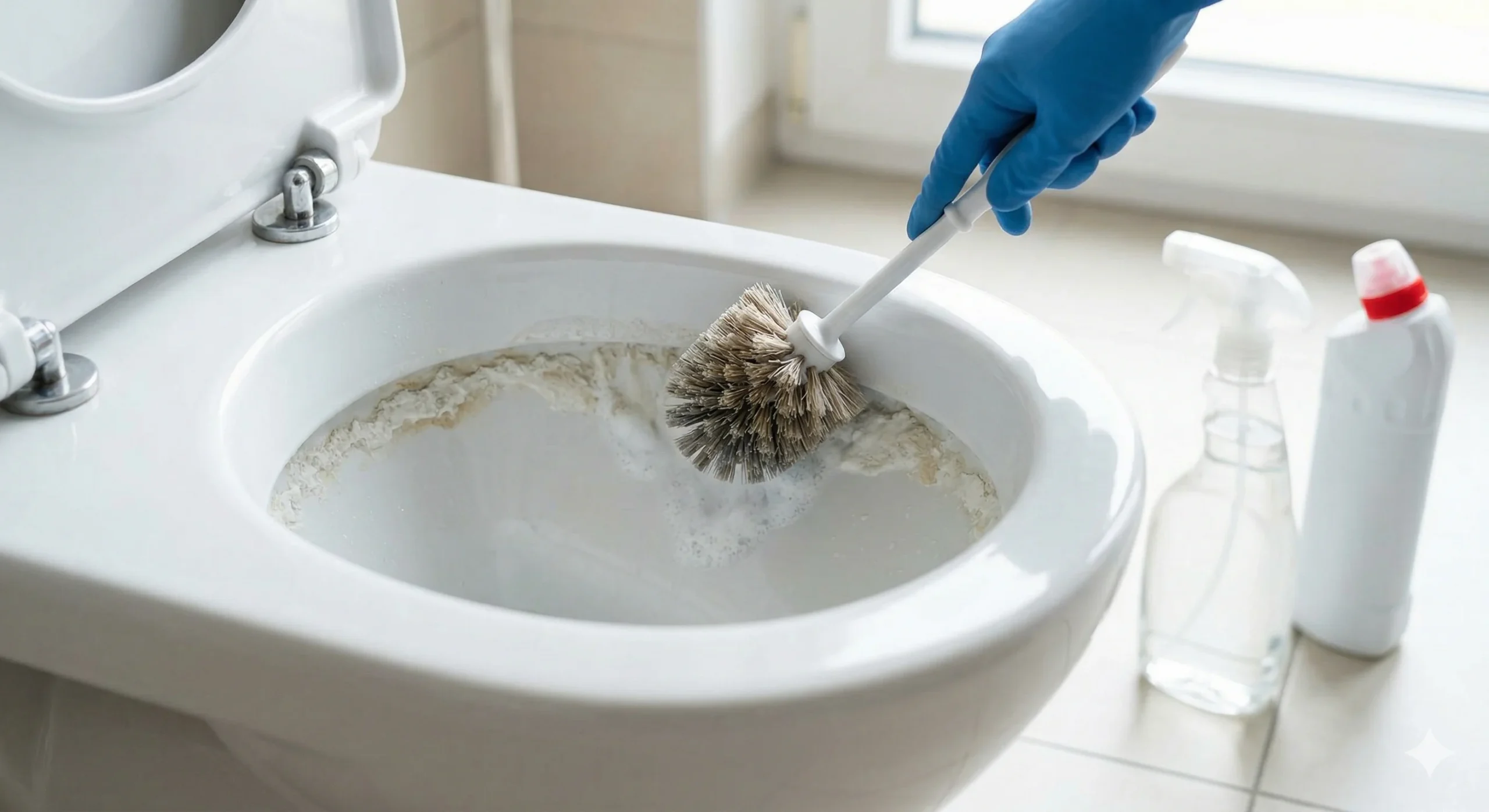
If you live in a hard water area, you are likely familiar with the stubborn, brown, crusty stains that develop in the bottom of your toilet bowl. It is a common misconception that these marks are the result of poor hygiene. In reality, they are thick mineral deposits—primarily calcium and magnesium—left behind every time your toilet flushes and the water evaporates.
Standard daily toilet cleaners and vigorous scrubbing with a plastic brush simply will not remove this buildup. Limescale is essentially rock, and to break down rock, you need to rely on a specific chemical reaction using acids. Here is a step-by-step, mechanical guide to safely dissolving heavy limescale and restoring the pristine white porcelain of your toilet bowl.
The Crucial First Step: Lower the Water Level
The single biggest mistake homeowners make when trying to descale a toilet is pouring the cleaning agent directly into a full bowl of water. When you do this, you instantly dilute the acid, rendering it completely useless against the hardened minerals sitting at the bottom of the U-bend.
To give your cleaning products a fighting chance, you must expose the raw limescale.
- Turn Off the Water: Locate the small isolation valve on the pipe behind or directly next to your toilet. Turn it clockwise to shut off the water supply to the cistern.
- Flush the Toilet: Flush the toilet once. Because the water supply is turned off, the cistern will not refill, and the water level in the bowl will drop significantly, exposing the thickest rings of limescale.
- Safety First: Before you handle any concentrated acids or commercial descalers, always put on a pair of thick rubber gloves to protect your skin from chemical burns and bacteria.
3 Methods to Remove Heavy Toilet Limescale
Once the water level is lowered, you can apply an acid directly to the mineral deposits. Here are the three most effective methods, ranging from natural pantry staples to heavy-duty commercial chemicals.
1. The Overnight Natural Fix (White Vinegar)
Standard white vinegar contains acetic acid, which is highly effective at breaking down the calcium bonds in limescale without releasing toxic fumes into your bathroom.
- The Process: Take a large bottle of undiluted white vinegar and pour it generously directly under the toilet rim, allowing it to cascade down the sides of the bowl. Pour the remainder directly onto the heavy stains sitting at the bottom.
- The Wait: Acid requires time to work. Let the vinegar sit undisturbed for a minimum of 3 to 4 hours. For exceptionally heavy, dark brown buildup, leave it to soak overnight.
- The Finish: In the morning, take a stiff-bristled toilet brush and scrub the bowl thoroughly. The acid will have softened the minerals, allowing them to flake off easily. Turn your water isolation valve back on, let the cistern fill, and flush to wash the debris away.
2. The Commercial Approach (Chemical Descalers)
If the natural route is not aggressive enough for years of neglected buildup, you will need to step up to a commercial chemical descaler, such as Domestos Zero Limescale.
- The Process: These products are formulated as thick gels so they cling to the vertical sides of the porcelain rather than sliding straight to the bottom. Apply the gel heavily around the entire inner rim of the bowl.
- The Wait: Because commercial acids are much stronger, you only need to leave the product on for exactly 30 minutes. Do not leave heavy chemicals in the bowl for days, as they can eventually degrade the rubber seals deeper in your plumbing.
- The Finish: Scrub vigorously with your brush and flush. If the porcelain is deeply etched and permanently ruined by decades of scale, no amount of scrubbing will save it, and you might start calculating how much does a new bathroom cost to replace the suite entirely.
3. Citric Acid (The Odourless Alternative)
If you cannot stand the pungent smell of white vinegar but still want a natural, non-toxic solution, citric acid is your best option.
- The Process: Boil a kettle of water and let it cool slightly so it is warm, not boiling (boiling water can crack a cold porcelain toilet bowl). Pour a cup of powdered citric acid directly into the toilet bowl, followed by the warm water.
- The Wait: The warm water activates the powder, creating an aggressive, bubbling, odourless acid bath. Leave it for an hour, scrub the softened scale, and flush.
How to Prevent Limescale Returning
Because the root cause of the stains is the mineral content of your local water supply, the limescale will always try to return. You must implement a maintenance routine to stop it from hardening.
- Short-Term Maintenance: Clean the bowl lightly once a week, and consider hanging an acidic toilet rim block inside the bowl. These blocks release a small amount of descaling agent into the water with every single flush, preventing the minerals from grabbing onto the porcelain.
- Long-Term Solution: If your entire house suffers from hard water—leaving white crusts on your taps and showerheads—consider installing a whole-house water softener. Installing a water softener not only keeps your toilet pristine, but it completely removes the hard water scale that frequently forces homeowners to research how to clean a washing machine to save their expensive appliances from breaking down.
FAQs on Toilet Limescale
Does bleach remove limescale? No. This is the most common cleaning mistake. Bleach is an alkaline disinfectant. It is fantastic for killing bacteria, and it will physically bleach the brown limescale so it turns bright white. However, the physical mineral crust will remain permanently stuck to the bowl. You cannot clean scale with an alkaline; you must use an acid to dissolve it.
Is it safe to use a pumice stone on a toilet? Yes, but with strict conditions. A wet pumice stone is naturally softer than toilet porcelain. If you have a stubborn ring of scale right at the waterline, you can gently rub it away with a pumice stone. However, the stone and the porcelain must be kept constantly wet while you work. If the pumice stone dries out, it will instantly and permanently scratch your toilet bowl.
Removing toilet limescale does not require hours of back-breaking scrubbing. The secret is simply draining the water, applying the right acid, and having the patience to let the chemistry do the heavy lifting for you.