






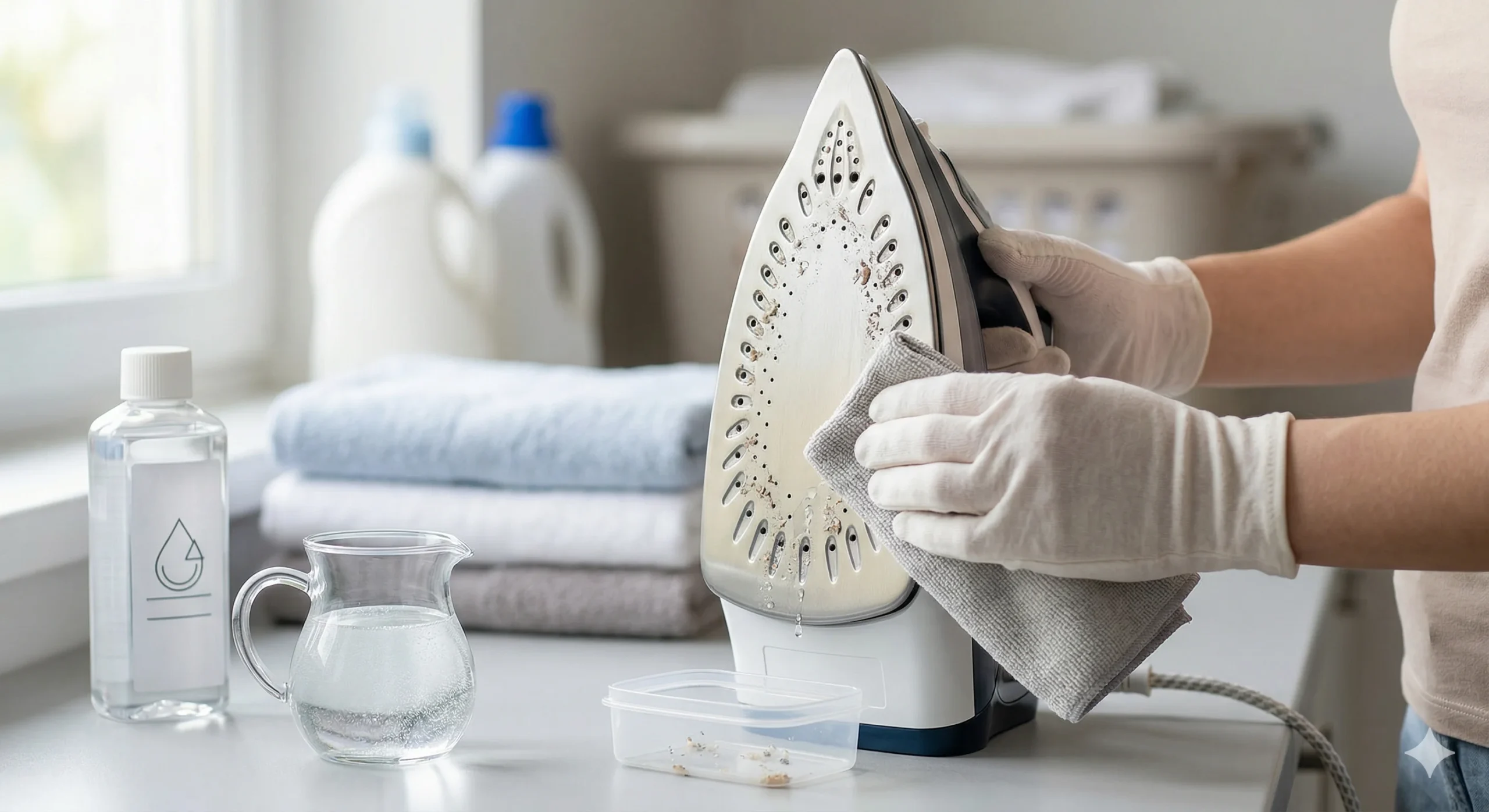
If your iron is leaving white flakes or brown scorch marks on your clothes, it is time for a deep clean. A dirty or scaled-up iron does not just ruin your favorite shirts by snagging the fabric; it actually consumes more electricity because the heat transfer is physically blocked by hardened mineral deposits.
Before you spend money replacing the appliance, you can easily rescue your current iron using standard household items. This guide will walk you through exactly how to safely clean the exterior soleplate and descale the internal steam reservoir without damaging the delicate non-stick coating.
Crucial Pre-Cleaning Checks (Read Before You Start)
Before you start pouring liquids or scrubbing the base, you must do a quick technical check to ensure you do not accidentally void your warranty or damage the machine.
- Check for a Self-Clean Button: Many modern irons feature a dedicated ‘self-clean’ or ‘calc-clean’ function. If your machine has this feature, you must always follow the manufacturer’s official instructions first before attempting manual descaling.
- The Vinegar Warning: White vinegar is undoubtedly a miracle cleaner for limescale. However, some specific appliance brands strictly advise against pouring it into the internal reservoir, as the high acidity can degrade internal rubber seals over time. Always verify your iron’s manual before proceeding with an internal vinegar flush.
3 Ways to Clean the Iron Soleplate (External Cleaning)
The exterior of your iron picks up burnt synthetic fibers, spray starch, and everyday dust. Here are three safe methods to strip that grime away and restore a smooth glide.
1. Soapy Water (For Light Cleaning)
For routine maintenance, this is the safest and most effective method.
- Ensure the iron is unplugged and the soleplate is completely cool to the touch.
- Dip a soft sponge into mild soapy water and lightly wipe the base.
- Warning: Never use abrasive scouring pads or steel wool. These materials will permanently scratch the Teflon or ceramic non-stick coating, and once scratched, the iron will constantly stick to your clothes.
2. The Toothpaste Hack (For Stubborn Marks)
If the base has stubborn scorch marks that dish soap cannot remove, reach for the toothpaste.
- Standard, non-gel white toothpaste acts as a very mild, safe abrasive.
- Rub a small amount directly onto the cold soleplate over the stubborn marks.
- Wipe it off thoroughly with a clean, damp cloth, ensuring no sticky residue is left behind in the steam vents.
3. Warm Vinegar and Salt (For Heavy, Burnt-on Deposits)
This method is for heavily neglected irons coated in thick, black carbonized fabric or burnt starch.
- Mix equal parts white vinegar and standard table salt in a small bowl, and warm the mixture slightly (do not boil it).
- Dip a soft sponge into this warm mixture and gently scrub the soleplate to break down the hardened deposits, then wipe it entirely clean with a fresh damp cloth.
- Using warm vinegar and salt cuts through hardened mineral deposits instantly, triggering the exact same chemical reaction we use when explaining how to clean a washing machine to remove hard water scale from the internal drum.
How to Descale the Internal Steam Reservoir
If your iron is struggling to generate proper steam, it means the internal plumbing is blocked by limescale. If your manual permits the use of vinegar, follow this strict process:
- The Mix: Fill the iron’s water tank with a 50/50 mixture of distilled water and white vinegar.
- The Steam: Plug the iron in and set it to its absolute highest heat and steam settings.
- The Flush: Take an old, thick towel (as dirty water will be expelled) and steam iron it for about five minutes. Repeatedly press the “steam burst” button to force the vinegar mixture through the internal chambers under high pressure.
Technical Fact: Limescale is essentially hardened calcium carbonate. The acetic acid in the vinegar safely dissolves these solid calcium rocks into a liquid form, allowing them to be forcefully pushed out through the steam vents.
The Final Rinse and Clearing the Vents
The descaling process does not end with the vinegar flush. You must clear the machine of all cleaning agents before using it on your clothes.
- Rinsing the Tank: Once the vinegar flush is complete, empty the reservoir entirely. Refill it with 100% fresh distilled water and repeat the heavy steaming process on the old towel. This crucial step rinses out any residual vinegar—you definitely do not want your freshly ironed work shirts smelling like a kitchen.
- Scrubbing the Vents: If you still see a white crust lingering around the steam holes on the soleplate, dip an old toothbrush into pure white vinegar and scrub the vents directly to physically clear away the final blockages.
FAQs on Iron Maintenance
Why is my iron spitting white flakes? Those white flakes appearing on your dark clothes are pieces of hardened limescale. It simply means your internal water reservoir has become heavily calcified and requires immediate descaling to restore proper function.
Should I use tap water in my iron? This depends entirely on where you live. If you live in an area with “hard water” (water with a high mineral content), you should always use distilled or deionized water. The minerals present in tap water evaporate over time, leaving behind solid rocks that will eventually clog the machine.
Extending the lifespan of your iron relies on a simple formula: wipe the cool soleplate lightly after every few uses, and flush the internal tank every couple of months. This minor habit will not only protect your wardrobe but also keep your household electricity consumption optimal.