






Parallel parking is universally considered one of the most intimidating driving manoeuvres. Whether you are a learner driver preparing for your practical test or an experienced driver who usually opts to park streets away just to avoid a tight space, the anxiety is incredibly common.
However, the reality is that parallel parking does not require innate talent or guesswork. It is a highly predictable, repeatable formula based on specific angles and visual reference points. Once you understand the mechanics of how your vehicle pivots around its rear wheels, you can confidently slot your car into spaces you previously thought were impossible.
Here is exactly how to execute a flawless parallel park every single time.
The Setup: Finding and Preparing the Space
A successful parallel park is determined before you even put the car in reverse. Rushing the setup is the number one reason drivers end up too far from the kerb or entirely outside the bay.
- Size Matters: Do not try to squeeze into a microscopic gap if you are still learning. Look for a space that is at least 1.5 metres (roughly half a car length) longer than your own vehicle. This gives you the necessary room to swing the front end in without panicking.
- Signal Early: As soon as you spot your target space, check your interior and exterior mirrors, and indicate left (if parking on the left side of a UK road). This clearly communicates your intentions to the traffic behind you, preventing them from tailgating you and blocking your reverse path.
- Pull Up Slowly: Drive past the empty space and pull up alongside the vehicle parked directly in front of it.
The 5-Step Parallel Parking Formula
Follow these five mechanical steps. If you hit your reference points accurately, the car will effectively park itself.
1. Position and Align
Stop your vehicle completely parallel to the car ahead of the empty space. You need to leave a lateral gap of about two feet (roughly door-to-door distance) between your car and theirs. If you are too close, you risk clipping their mirror; if you are too far wide, your turning angle will be too shallow.
The Key Reference Point: Look out your left passenger window. Adjust your position until your rear wheels (or your rear bumper) are exactly aligned with the rear bumper of the target car.
2. The First Turn (The 45-Degree Angle)
Before you move a single inch, you must perform a comprehensive safety check. Look in all your mirrors, and crucially, look over your right shoulder into your blind spot to ensure no cyclists or cars are attempting to overtake you.
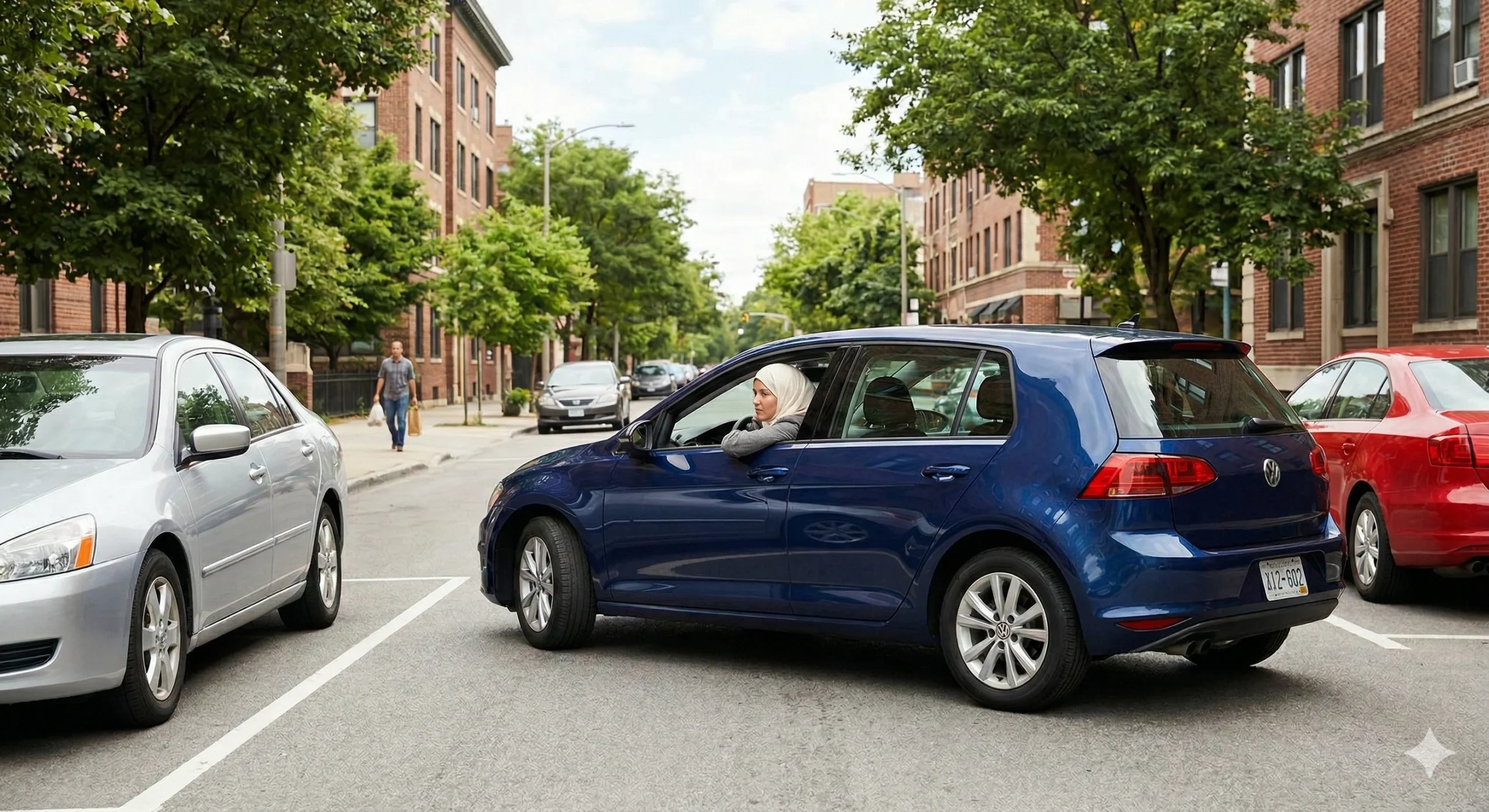
Shift into reverse gear. Turn the steering wheel fully towards the kerb (full left lock). Begin to reverse at a crawling pace using clutch control. Keep reversing until your vehicle is sitting at exactly a 45-degree angle to the kerb. You can usually judge this angle by looking in your right wing mirror; when the car parked behind the empty space is fully visible in the center of that mirror, you are generally at 45 degrees. Stop the car.
3. Straighten and Clear
While completely stationary, straighten your steering wheel (usually one and a half turns back to the center). Now, reverse straight back very slowly.
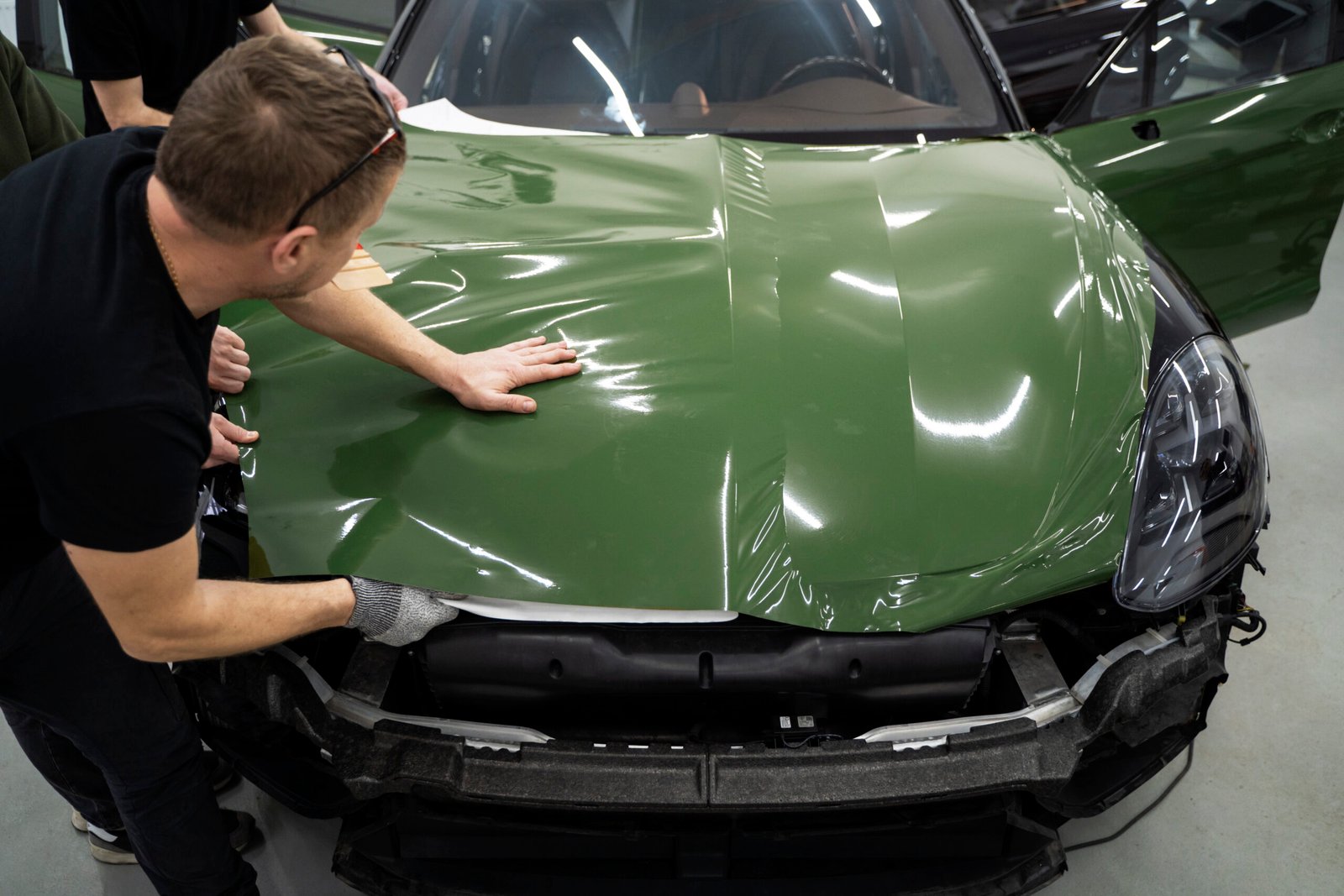
You must keep reversing straight until your front left bumper completely clears the rear right bumper of the car ahead of you. You want to ensure you have total physical clearance, especially if you have recently invested in your vehicle’s exterior and know exactly how much to wrap a car—scratching it now is an expensive mistake. Once the front is clear, stop the car again.
4. Tuck the Front In
Now that the rear of your car is deep in the space and the front is clear of the obstacle ahead, it is time to swing the nose in.
Turn the steering wheel fully away from the kerb (full right lock). Look out your rear window and slowly continue reversing. Because the steering is locked to the right, the front of your car will sharply tuck into the space while the rear perfectly aligns parallel to the pavement. Stop as soon as the car is straight.
5. Final Adjustments
Once you are parallel to the kerb, straighten the steering wheel. Assess your position. If you are slightly too far back, shift into first gear and creep forward slightly to leave an equal amount of space between the car in front of you and the car behind you. Apply the handbrake and shift into neutral (or park).
UK Driving Test: What Do Examiners Look For?
If you are asked to perform a parallel park during your UK practical driving test, the examiner is not expecting a racing-style, fluid slide into the bay. You are allowed to take your time, and you are even allowed to pull forward to correct yourself if you misjudge an angle.
Examiners assess this manoeuvre strictly on three criteria:
- Control: You must keep the vehicle moving at a walking pace. Rapid, jerky reversing will result in a fault.
- Accuracy: You need to end up reasonably close to the kerb (within an acceptable distance) and parallel to the road.
- Observation: This is the most critical factor. You must constantly look around, especially out the rear window. If another vehicle, cyclist, or pedestrian approaches while you are manoeuvring, you must stop and wait for them to pass. Nailing these observation checks under pressure is a massive milestone when factoring in how long does it take to learn to drive and finally pass your practical exam.
FAQs on Parallel Parking
What happens if I hit the kerb while parking? On a driving test, gently tapping or brushing the kerb with your tire is usually recorded as a minor driving fault, provided you correct it safely. However, forcefully hitting the kerb, or worse, mounting the pavement with your wheel, is an automatic major fault and will result in a failed test.
Can I use my reversing camera during the driving test? Yes, modern driving tests permit the use of reversing cameras and parking sensors. You can use the screen to help judge your distance from the car behind you. However, you must still perform physical head checks and look out of the rear window. Relying only on the dashboard screen demonstrates a lack of all-around observation and will result in a fail.
Parallel parking is not a dark art; it is simply a checklist of actions. If you find the manoeuvre stressful, take your car to a quiet, empty street and practice the 45-degree angle using wheelie bins or traffic cones. With a little repetition, aligning those reference points will become second nature.