







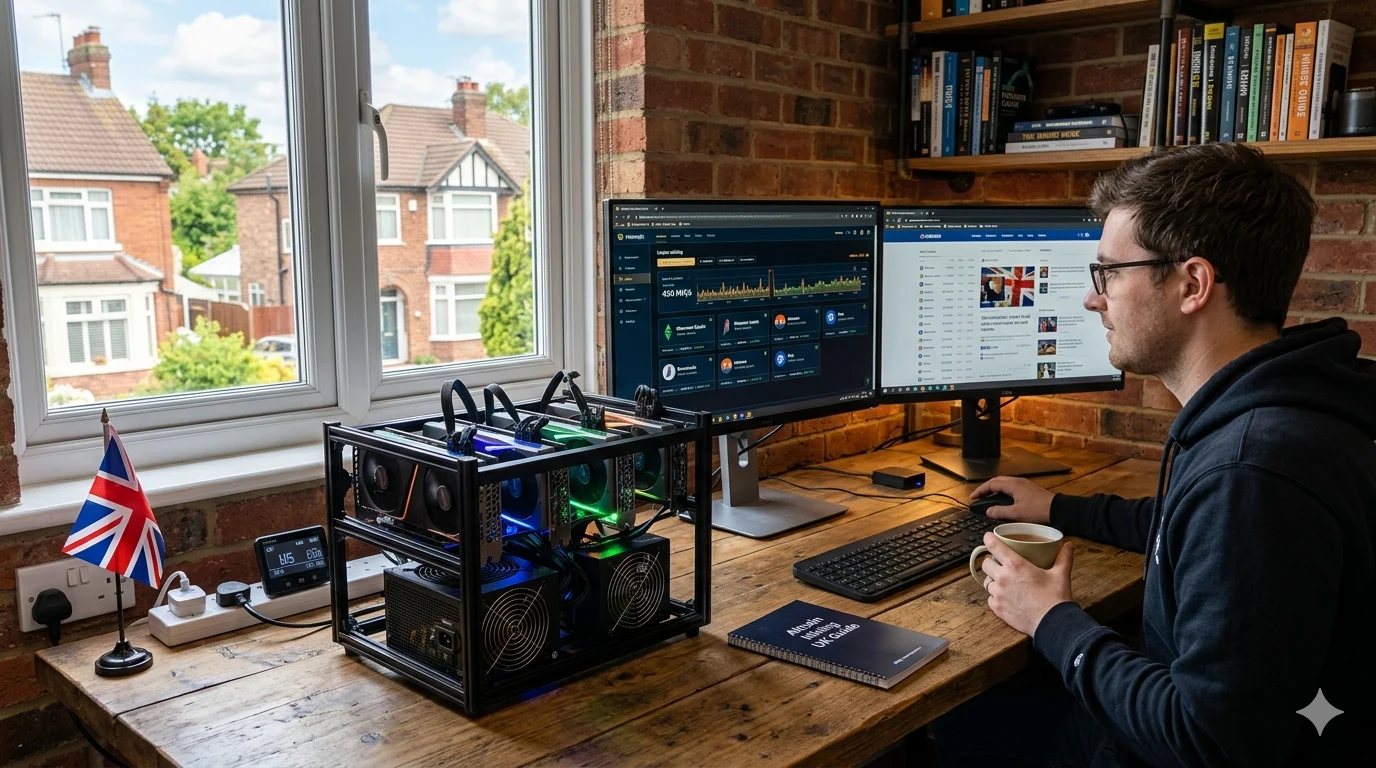
Cryptocurrency mining often sounds like some complex matrix code, but at its core, it is just a utility: your computer validates transactions on a blockchain network, and the network pays you in coins for your computing power.
Many people think cryptocurrency mining just means mining Bitcoin. But the reality is, the Bitcoin network difficulty is so high now that you need industrial-level warehouse setups to make a profit. If you are a beginner, altcoins (alternative cryptocurrencies) offer a much more practical and accessible starting point. Let’s break down exactly how you can start mining altcoins from home, specifically keeping the UK’s current energy landscape in mind.
What Do You Need to Start Mining Alt Coins?
You don’t need to be a coding genius to start, but you do need the right infrastructure. Here is your essential toolkit:
1. A Secure Digital Wallet
Before you mine a single coin, you need a place to store it safely. A digital wallet holds your private keys and lets you send or receive crypto. Set this up first, and always enable Two-Factor Authentication (2FA). If you lose your wallet access or get hacked, your mined coins are gone forever.
2. Reliable Mining Software
Your hardware does the heavy lifting, but mining software connects that hardware to the actual blockchain network. Industry-standard software options like CGMiner or PhoenixMiner are great starting points. You will configure this software to send your hashing power to your specific wallet address.
3. The Right Hardware Rig
Mining hardware falls into four main categories:
- GPUs (Graphics Processing Units): The go-to for beginners. High-end gaming graphics cards are versatile and can mine various altcoins.
- ASICs (Application-Specific Integrated Circuits): Expensive, loud machines built to mine one specific algorithm and nothing else.
- CPUs & FPGAs: Less common for modern profitable mining, though some specific coins are still CPU-mineable.
The “best” choice depends entirely on the specific coin’s hashing algorithm and your budget. Tech moves fast, so keeping an eye on major trends in technology will help you choose an efficient GPU or ASIC before it becomes obsolete.
Solo Mining vs. Mining Pools: Which is Better?
If you are just starting out, this is the most critical decision you will make.
- Solo Mining: You run your rig independently. If your computer solves the cryptographic puzzle first, you get 100% of the block reward. The technical reality? Competing against massive data centers means a single home GPU might take years to solve a block. It’s essentially a lottery.
- Mining Pools: You join forces with thousands of other miners over the internet, combining your hashing power. When the pool mines a block, the reward is split proportionally based on how much computing power you contributed. For beginners, mining pools are the only realistic way to see consistent, daily payouts.
Top Mineable Altcoins for Beginners
Not all altcoins can be mined (many use Proof-of-Stake now instead of Proof-of-Work). Here are three solid, established options for miners:
- Ethereum Classic (ETC): A solid choice for GPU miners looking for a stable network.
- Litecoin (LTC): Uses the Scrypt algorithm, making it a staple for ASIC miners.
- Dogecoin (DOGE): Tech Fact: Dogecoin also uses the Scrypt algorithm. In fact, many miners use “merge-mining” to mine both Litecoin and Dogecoin simultaneously using the exact same computing power, maximizing their hardware efficiency.
The Reality of Mining Profitability in the UK
Let’s talk numbers, straight up. Profitability isn’t just about the coin’s market price going to the moon. In the UK, electricity costs (pence per kWh) are a massive factor.
Your real profit formula is: (Coin Price + Block Reward) – (Hardware Depreciation + Electricity Costs).
An inefficient rig pulling huge wattage will bleed your bank account dry. If you decide to scale up and run multiple rigs, treating it like a proper business with strict technology expense management is critical. Track your wattage and calculate your overhead before you buy any hardware. Use online profitability calculators (like WhatToMine) and input your exact UK electricity rate to see daily estimates.
Is Cloud Mining Worth It?
Cloud mining involves renting remote computing power from a company so you don’t have to buy or maintain physical hardware.
While it sounds stress-free, proceed with extreme caution. The cloud mining space is historically filled with scams, hidden withdrawal fees, and contracts that lock you in even if the coin’s price crashes. Building your own rig requires learning, but at the end of the day, you own the physical hardware which retains resale value.
FAQs on Altcoin Mining
Do I need a massive budget to start mining altcoins? No. You can start small with a single, high-efficiency GPU in your current PC to learn the ropes. Just scale your profit expectations accordingly—you won’t get rich overnight, but you will learn how the blockchain functions firsthand.
Is cloud mining safer than buying my own hardware? Financially, no. Owning your hardware is safer because it is a tangible asset you control. Cloud mining requires trusting a third party to pay you out fairly.
Mining is a great way to enter the Web3 space by literally building and supporting the network. Start small, calculate your energy costs accurately, and learn the software. The work is certainly a bit technical, but once you set it up, it is a great skill to have.