






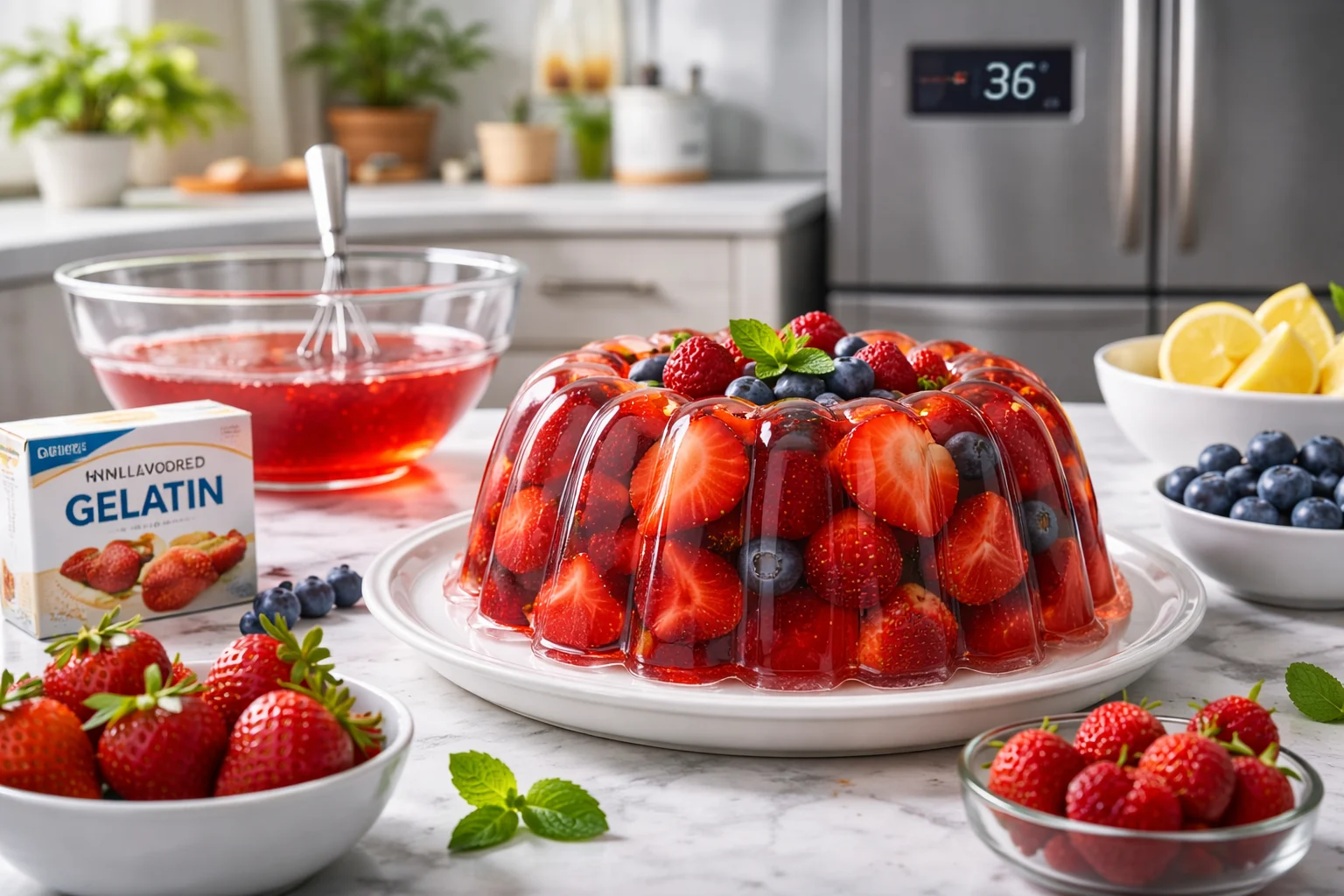
Jelly is one of the simplest and most popular desserts to prepare at home. However, many people wonder how long does jelly take to set after preparing it. Whether you’re making jelly for a party, dessert, or a quick treat, understanding the setting time helps you plan properly.
Quick Answer
Jelly usually takes about 2–4 hours to set in the refrigerator. The exact time depends on factors such as the amount of liquid used, sugar content, gelatin concentration, and the size of the container. For the firmest texture, it is best to leave jelly in the fridge overnight.
What Is Jelly and How Does It Set?
Jelly is a gelatin-based dessert made by dissolving flavored gelatin powder in hot water and allowing it to cool until it forms a semi-solid structure.
The key ingredient responsible for jelly’s texture is gelatin, a protein derived from collagen. When gelatin dissolves in hot water and then cools, the protein molecules form a network that traps water inside, creating the familiar wobbly texture of jelly.
As the mixture cools in the refrigerator, the gelatin molecules bond together and gradually solidify the liquid into a gel.
How Long Does Jelly Take to Set in the Fridge?
For most homemade jelly desserts, the standard refrigeration time is:
2 to 4 hours
However, the setting time may vary depending on several factors.
Small Jelly Cups
If the jelly mixture is poured into small cups or shallow containers, it may set faster, sometimes within 2 hours.
Large Moulds
Larger moulds contain more liquid and therefore require more time to cool. These may take 4 hours or longer to set fully.
Best Results
For the best texture and firmness, many cooks recommend allowing jelly to chill overnight in the refrigerator.
Factors That Affect Jelly Setting Time
Several variables influence how quickly jelly sets.
Amount of Liquid
Using too much liquid can weaken the gelatin mixture and slow down the setting process. Always follow the instructions on the packet or recipe.
If you’re measuring ingredients for recipes, understanding liquid measurements—such as how many ounces are in 750 ml—can help ensure accurate proportions.
Gelatin Concentration
The more gelatin present in the mixture, the firmer and faster the jelly will set. Too little gelatin may cause the dessert to remain soft or not set properly.
Refrigerator Temperature
Jelly sets best at a refrigerator temperature of around 4°C (39°F). If the fridge temperature is too warm, the setting process may take longer.
Container Depth
Deep containers hold more liquid and therefore require more time to cool compared to shallow dishes.
Can You Make Jelly Set Faster?
If you are short on time, there are a few tricks to help jelly set faster.
Use Shallow Containers
Pouring jelly into shallow dishes increases surface area and allows it to cool more quickly.
Chill Ingredients Before Mixing
Using cold water instead of room-temperature water can reduce the cooling time.
Use the Freezer Carefully
Placing jelly in the freezer can speed up the cooling process. However, it should only be used for short periods, as freezing can damage the texture.
Jelly should ultimately be stored in the refrigerator rather than the freezer.
Fruits That Prevent Jelly From Setting
One of the most common reasons jelly fails to set is the use of certain fresh fruits.
Some fruits contain enzymes that break down gelatin proteins and stop the mixture from forming a gel.
Fresh fruits that prevent jelly from setting include:
- Pineapple
- Kiwi
- Mango
- Papaya
These fruits contain enzymes such as bromelain and actinidin, which break down the collagen structure in gelatin.
Solution
You can still use these fruits if they are canned or cooked, because heat destroys the enzymes responsible for breaking down gelatin.
Why Your Jelly Did Not Set
Sometimes jelly remains runny even after several hours in the refrigerator.
Common reasons include:
Too Much Water
Adding extra liquid can dilute the gelatin mixture and prevent proper setting.
Not Enough Gelatin
If the recipe does not contain enough gelatin, the dessert may remain soft.
Warm Storage Conditions
If jelly is placed in a warm environment or a fridge that is not cold enough, the setting process slows down significantly.
Enzyme-Rich Fruits
As mentioned earlier, certain fruits can break down gelatin and prevent it from setting.
Tips for Perfect Jelly Every Time
To ensure your jelly sets properly, follow these helpful tips.
Follow the Recipe Carefully
Always use the recommended ratio of gelatin to liquid.
Allow Enough Chilling Time
Although jelly may appear firm after a few hours, letting it chill overnight often produces the best texture.
Avoid Warm Ingredients
Hot ingredients can slow down the cooling process and delay setting.
Use Proper Storage
Once prepared, jelly should always be stored in the refrigerator. Maintaining proper refrigeration temperatures is important for many foods, similar to guidelines about how long farm fresh eggs last when stored correctly.
Frequently Asked Questions
How long does jelly take to set in the fridge?
Most jelly desserts set within 2–4 hours in the refrigerator. For a firmer texture, allowing the jelly to chill overnight is recommended.
Can jelly set in the freezer?
Jelly can cool faster in the freezer, but it should not be stored there for long periods because freezing can damage its texture.
Why didn’t my jelly set?
Jelly may fail to set if too much water is added, not enough gelatin is used, or if certain fresh fruits with enzyme activity are included.
Can you add fruit to jelly?
Yes, but some fruits—such as pineapple, kiwi, mango, and papaya—contain enzymes that prevent gelatin from setting unless they are cooked or canned.
How do you make jelly set faster?
Using shallow containers, chilling ingredients beforehand, and placing jelly briefly in the freezer can help speed up the setting process.
Final Thoughts
Understanding how long jelly takes to set helps ensure your dessert turns out perfectly every time. In most cases, jelly needs 2–4 hours in the refrigerator, though leaving it overnight often provides the best results.
By following proper ingredient ratios, avoiding enzyme-rich fruits, and allowing sufficient chilling time, you can easily create smooth, firm jelly desserts that are ready whenever you need them.