






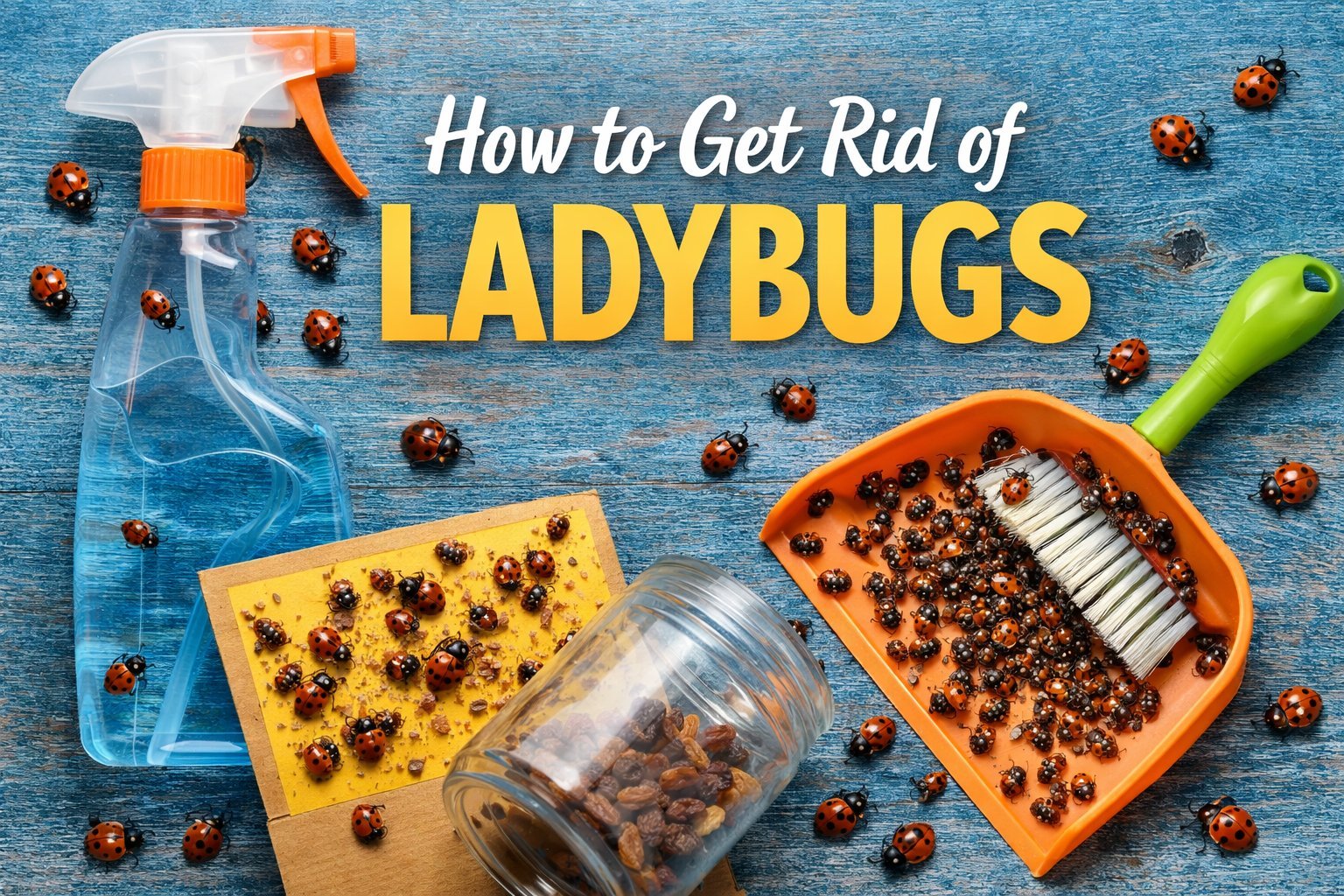
Finding a swarm of ladybugs on your windows or ceiling can be a jarring experience. While native ladybugs are beneficial garden helpers, their look-alike cousin—the Asian lady beetle—often invades homes in massive numbers during the fall and spring.
If you are wondering how to get rid of ladybugs, you need a strategy that removes the current infestation without staining your furniture or harming your pets. This comprehensive guide covers natural removal, permanent prevention, and why you should never squish them.
1. The Quickest Way to Remove Ladybugs (AEO)
If you already have a cluster of ladybugs inside, do not grab a fly swatter.
Direct Answer: The best way to get rid of ladybugs in the house is to vacuum them up. Use a hose attachment to suck up the beetles and immediately empty the bag or canister into a sealed trash bag outdoors. This prevents them from crawling back inside and avoids “reflex bleeding”—a process where they release a yellow, foul-smelling liquid that stains surfaces.
2. Ladybugs vs. Asian Lady Beetles: Know Your Enemy
Before you start your removal process, it is important to know that most “home invasions” are actually caused by Asian lady beetles (Harmonia axyridis).
- Native Ladybugs: These are typically bright red with black spots and prefer to stay outside during winter, hiding under leaves or logs.
- Asian Lady Beetles: These vary from pale orange to deep red and usually have a distinct black “M” or “W” shape on the white area behind their head. These are the ones that swarm sunny walls and squeeze into your attic.
Understanding the behavior of these pests is the first step in home maintenance. Just as small black bugs in house can signal specific entry points or moisture issues, a ladybug swarm usually points to gaps in your siding or window seals.
3. Natural Repellents to Keep Them Away
If you prefer a chemical-free home, several scents act as powerful deterrents to ladybugs and beetles.
Essential Oil Sprays
Ladybugs have a highly sensitive sense of smell. You can create a DIY repellent by mixing water with 10–15 drops of:
- Peppermint Oil
- Clove Oil
- Citrus Oil
Spray this mixture around window sills, door frames, and any crevices where you see them entering. The scent disorients them and encourages them to find a different place to overwinter.
Diatomaceous Earth (DE)
For a more permanent barrier, sprinkle food-grade diatomaceous earth along your baseboards and windowsills. This natural powder dehydrates the beetles on contact. It is non-toxic for humans and pets, making it a safer alternative to indoor insecticides.
4. Permanent Prevention: The Exclusion Method
Getting rid of the current swarm is only half the battle. To stop them from returning next year, you must “pest-proof” your home’s exterior.
- Seal the Gaps: Ladybugs can fit through cracks as small as 1/16th of an inch. Use high-quality silicone caulk to seal gaps around utility pipes, window frames, and door jams.
- Repair Screens: Check your window and door screens for tiny tears.
- Landscape Maintenance: Trim back bushes and trees so they don’t touch your siding. Keeping a clean perimeter is key; for example, knowing when to apply pre-emergent for your lawn is part of a larger maintenance cycle that keeps your home’s exterior tidy and less attractive to pests.
5. Are Ladybugs Dangerous to Pets?
While they don’t carry human diseases, Asian lady beetles can be problematic for curious dogs. If a dog eats several beetles, the “reflex blood” can cause chemical-like burns on the roof of the mouth or gastrointestinal upset.
Signs your pet may have eaten ladybugs:
- Excessive drooling
- Vomiting or lethargy
- Changes in behavior
If you notice large clusters, keep your pets away from the area until you can vacuum them up.
Summary Checklist for Removal
| Step | Method | Why it Works |
| Immediate | Vacuuming | Removes swarms without staining or odors. |
| Repel | Peppermint Oil | Disorients the beetles and prevents nesting. |
| Kill (Natural) | Diatomaceous Earth | Dehydrates the insects without chemicals. |
| Prevent | Caulking | Blocks the physical entry points to your home. |
Would you like me to help you create a seasonal home maintenance checklist to keep your home pest-free year-round?