







For decades, the “steel toe” was the undisputed king of the job site. If you needed safety boots, you bought steel. But today, modern materials have introduced a serious contender: the composite toe.
If you are searching for composite toe vs steel toe differences, you are likely weighing safety against comfort. The short answer? Steel toe boots are heavier, cheaper, and thinner, making them ideal for heavy machinery operators. Composite toe boots are lighter, warmer, and non-conductive, making them the superior choice for electricians, airport workers, and anyone walking long distances.
This guide breaks down the weight differences, safety ratings, and pros and cons of each to help you decide.
What Is the Difference? (The Materials)
The primary difference lies in what protects your toes from being crushed.
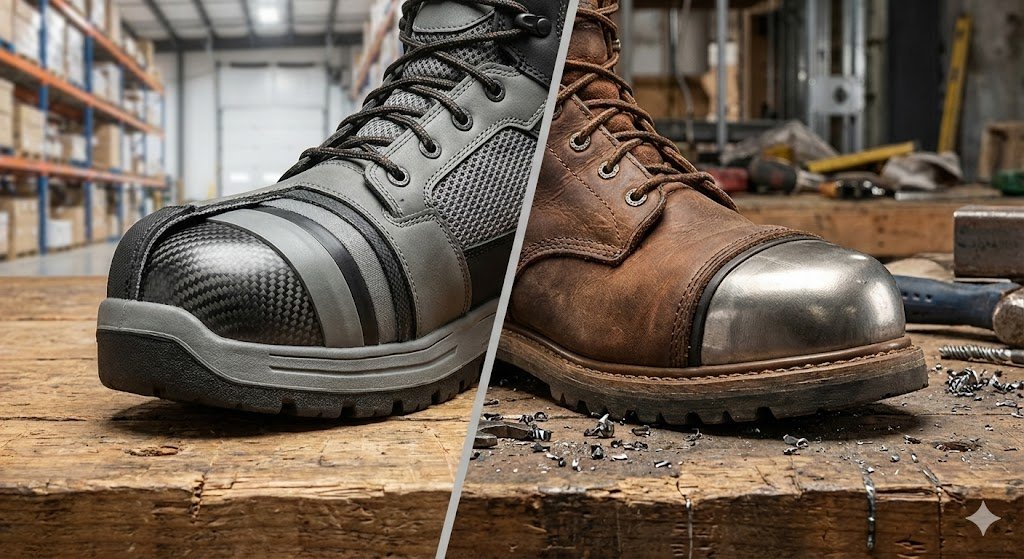
- Steel Toe: The traditional choice. It features a heavy-duty cap made of steel. Because steel is so strong, the cap can be made relatively thin, resulting in a sleeker toe box.
- Composite Toe: These are made from non-metal materials. Common answers to “what is composite toe made of” include Kevlar, carbon fiber, fiberglass, or heavy-duty plastic. Because these materials aren’t as dense as steel, the toe cap must be thicker to offer the same protection, often resulting in a “bulbous” or chunky look.
Key Comparisons: Weight, Weather & Electricity
When choosing between the two, you aren’t just choosing protection; you are choosing how your feet will feel at the end of a 12-hour shift.
1. Weight Comparison
This is the biggest selling point for composite.
- Composite: Generally 30% lighter than steel. While a few ounces doesn’t sound like much, lifting that extra weight 10,000 times a day (steps) adds up to massive leg fatigue.
- Steel: Heavier. If you sit in a machine cab all day, this might not matter. If you walk miles, it will.
2. Temperature Control (Thermal Conductivity)
- Steel: Conducts temperature. In winter, the steel pulls heat away from your toes (making them freeze). In summer, it heats up.
- Composite: An insulator. It does not conduct heat or cold, keeping your foot temperature stable in extreme weather.
- Pro Tip: For workers in outdoor environments—similar to those managing vast grounds like the Morgan Hill Outdoor Sports Center—staying warm in winter is critical for mobility. Composite is the clear winner here.
3. Electrical Hazards & Metal Detectors
- Steel: Conducts electricity and sets off metal detectors.
- Composite: Non-conductive and non-magnetic.
- Do composite toe boots pass metal detectors? Yes. If you work at an airport, courthouse, or nuclear facility, composite boots allow you to walk through security without taking your shoes off.
Safety Standards: Is Composite as Safe as Steel?
A common myth is that composite toes are “weaker.” This is false regarding certification.
Both boot types must pass the same ASTM F2413 safety standards.
- Impact Rating (I/75): Withstands a 75-pound impact (like a falling cinder block).
- Compression Rating (C/75): Withstands 2,500 lbs of rolling pressure.
The Failure Difference: While they pass the same tests, they fail differently. Steel tends to dent and stay bent (which can trap toes), while composite tends to crack or shatter and bounce back to its original shape. Note: Once a composite toe takes a hit, the structure is compromised and must be replaced, even if it looks fine on the outside.
Who Should Wear Which?
| Feature | Steel Toe | Composite Toe |
| Best For | Heavy Construction, Machinists | Electricians, Warehouse, Airports |
| Budget | Usually Cheaper | More Expensive |
| Profile | Thinner / Sleeker | Thicker / Bulkier |
| Metal Detector | Beeps 🚨 | Passes ✅ |
Export to Sheets
- Construction: If you are framing or pouring foundations—like those calculating how much does it cost to build a 2 story house—steel is often preferred because it is cheaper and the puncture protection is absolute.
- Electricians: Always go composite. The non-conductive nature is a secondary life-saving layer against live circuits.
Conclusion
So, composite toe vs steel toe?
- Choose Steel if you want maximum durability for the lowest price and don’t mind the weight.
- Choose Composite if you walk a lot, work in the cold, or need to pass through security checkpoints daily.
Your feet carry you through your career—invest in the pair that makes the journey bearable.