






Exterior lighting is often the “jewelry” of a home’s façade. While its primary function is to help you find your keys in the dark or deter potential intruders, the right fixtures play a massive role in architectural design. A well-placed lantern can make a modest entryway feel grand, while strategic floodlights can turn a dark driveway into a safe, usable space.
However, selecting exterior house lamps involves more than just picking a style you like. You must navigate IP ratings for weather resistance, understand color temperatures, and determine the correct sizing for your specific spaces. This guide covers everything from enhancing your front porch to securing your garage.
Quick Guide: Placement & Brightness
If you are planning a lighting layout, use this quick reference to balance ambiance with utility.
| Location | Recommended Fixture Type | Ideal Brightness (Lumens) | Primary Goal |
| Front Porch | Wall Sconces / Pendants | 400 – 800 | Welcoming guests / Visibility |
| Garage | Floodlights / Wall Lanterns | 700 – 1300+ | Security / Task Lighting |
| Backyard | String Lights / Path Lights | 50 – 300 | Ambiance / Safety |
| Driveway | Post Lights / Motion Spots | 1000+ | Navigation / Security |
Front Porch Lights: Welcoming Guests in Style
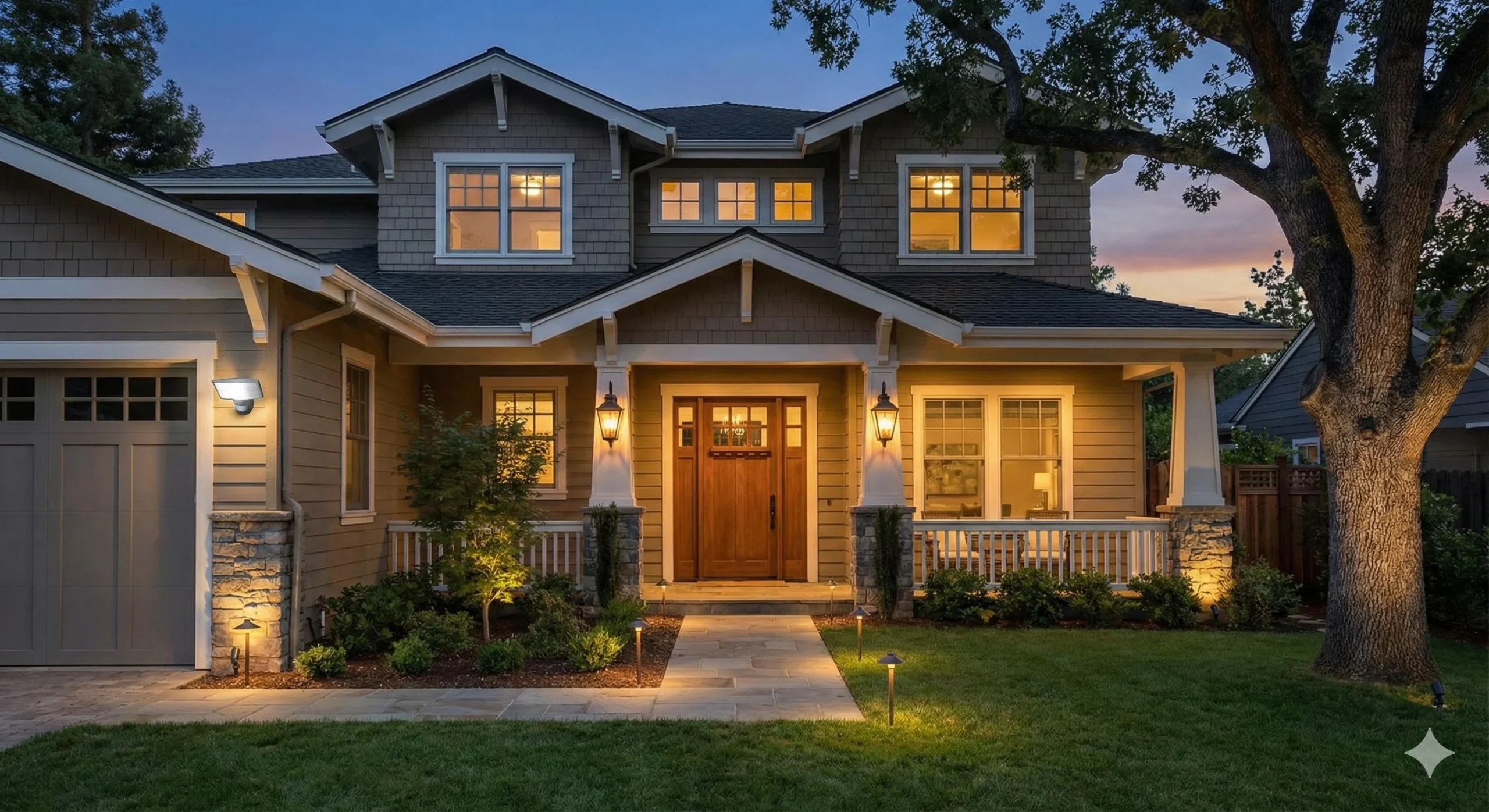
Your front door is the focal point of your home’s exterior. The lighting here sets the tone for visitors and defines your curb appeal.
The Sizing Rule
A common mistake homeowners make is buying fixtures that are too small. When selecting outdoor wall light fixtures to flank your front door, follow the “1/3 Rule”: The light fixture should be approximately one-third the height of the door.1 If you have two lights (one on each side), they can be slightly smaller—about one-quarter the height of the door.
Mounting Height
For optimal light throw and visual balance, the center of the light source (the bulb) should be roughly 66 inches (5.5 feet) from the ground. This keeps the light at eye level without causing glare.
Choosing the Right Style
- Lanterns: Classic and versatile, these work well with colonial, farmhouse, and traditional homes.2
- Flush Mounts: Ideal for porches with low ceilings where a hanging pendant might obstruct the door swing.3
- Dark Sky Friendly: Consider fixtures that direct light downward. This reduces light pollution and focuses the illumination on the path where it is needed, rather than the sky.
Garage Outside Lights: Security Meets Function
The garage area is often the most trafficked entry point for the family, yet it is frequently under-lit. Garage outside lights serve a dual purpose: they assist you in parking safely and act as a primary deterrent against theft.
Placement Strategies
- Single Side Entry: If your garage is attached and has a side door, a single motion-activated sconce is essential for fumbling with keys.
- The Carriage House Look: For the main garage door, placing lanterns on either side creates a sophisticated, finished look. This is particularly effective if you have recently upgraded the door itself.
- Renovation Tip: Installing high-quality lighting is often the final touch in a garage exterior makeover. For instance, after you have put in the effort to learn how to paint a garage door or exterior wall, a modern matte-black fixture is the perfect accessory to contrast against the fresh paint.
Security Sensors
For driveways, function trumps fashion. Motion-sensor floodlights installed at the corners of the garage roofline provide broad coverage. Look for fixtures with “dual-brite” technology—they stay on at a low level for accent lighting but flash to full brightness when motion is detected.
Creating Ambiance: Outdoor Patio Lighting & Backyard Ideas
While the front yard is about presentation, the backyard is about living. Lights for backyard spaces should be softer, warmer, and more focused on mood than security.
Zoning Your Light
Treat your patio like an indoor room. You want brighter light near the grill (task lighting) and softer light near the seating area (ambient lighting).
- String Lights: Draping bistro lights across a patio creates an instant “ceiling,” making the outdoor space feel intimate.
- Deck Lighting: If you have a raised deck, safety is paramount. Low-voltage LED riser lights on stairs prevent trips.4 Furthermore, lighting the perimeter can highlight architectural details, such as illuminating your custom deck skirting ideas to showcase the craftsmanship while keeping critters away from the underside of the deck.
Outdoor Patio Lighting Trends
Portable LED lanterns are gaining popularity. These rechargeable exterior house lamps can be moved from the dining table to the lounge area, offering flexibility without the need for expensive hardwiring.
Technical Buying Guide: What is an IP Rating?
When shopping for exterior lamps for house use, you cannot simply buy a standard indoor fixture. You must check the IP (Ingress Protection) Rating. This two-digit number tells you how well the fixture resists dust and water.
- IP44 (Splash Proof): Suitable for sheltered areas, like a covered porch where the light won’t get hit directly by heavy rain.
- IP65 (Water Jet Proof): Required for exposed areas, such as garage outside lights or garden spotlights that face direct rain, snow, and sprinklers.5
Color Temperature (Kelvins)
The “color” of the light changes the feel of your home.
- 2700K – 3000K (Warm White): Best for architectural features, stone walls, and brick.6 It mimics the warm glow of incandescent bulbs.
- 4000K (Cool White): Best for security floodlights. It appears brighter and more alert but can look harsh on decorative features.
Conclusion
Upgrading your exterior house lamps is one of the most cost-effective ways to increase your home’s value and livability. Whether you are installing elegant front porch lights to boost curb appeal or adding robust outdoor wall light fixtures for security, the key is balancing aesthetics with technical durability. Ensure your fixtures are rated for the weather, sized correctly for the space, and positioned to enhance the natural beauty of your home.