




When a catastrophe strikes—whether it is an earthquake, a flood, or a wildfire—the gap between life and death is often measured in minutes. In those critical moments, the effectiveness of the response depends entirely on the people on the ground: the disaster management crew.
These teams, comprising first responders, logistics experts, medical personnel, and volunteers, are the backbone of crisis resilience. Yet, they are frequently overworked, under-resourced, and exposed to extreme psychological stress. To truly save lives, we must move beyond simply applauding their bravery. We must actively empower them with the tools, training, and support they need to operate at their peak.
Here is a comprehensive guide on how can we empower the disaster management crew to build a safer, more resilient future.
1. Integrating Advanced Technology and Communication
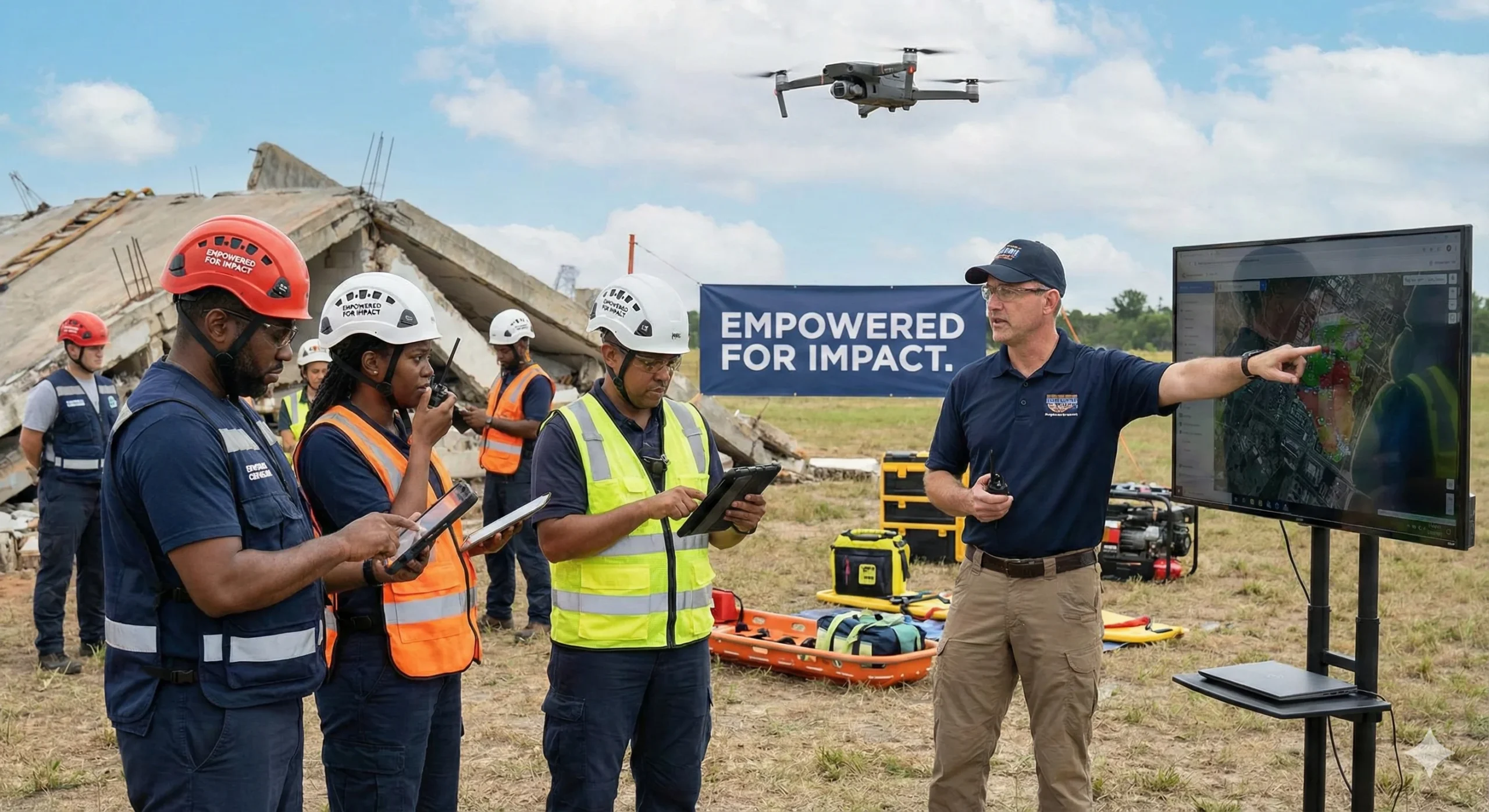
The days of relying solely on radio frequencies and paper maps are over. To truly empower a modern natural disaster response team, we must equip them with “disruptive technologies” that offer real-time situational awareness.
The Role of Drones and AI
Unmanned Aerial Vehicles (UAVs), or drones, have revolutionized disaster response. For example, in countries like Malawi and Rwanda, drones are already being used to transport medical samples and blood supplies to hard-to-reach areas, bypassing damaged roads entirely. For a rescue crew, a drone can be the “eye in the sky,” identifying heat signatures of survivors trapped under rubble or mapping the spread of a wildfire before the team enters the danger zone.
Artificial Intelligence (AI) also plays a pivotal role. AI algorithms can analyze vast amounts of data—from weather patterns to social media posts—to predict where resources will be needed most. This allows the crew to be proactive rather than reactive.
Securing Communication Lines
However, technology is only as good as its connectivity. During major disasters, standard cellular networks often collapse. Empowering the crew means establishing independent, robust communication grids, such as satellite internet (Starlink, etc.) or mesh networks.
Furthermore, when digital infrastructure faces an outage or a cyber-threat during a chaotic event, having a pre-planned strategy for IT crisis management is essential. This ensures that the command center remains operational, keeping data flowing between the field crew and headquarters even when traditional systems fail.
2. Prioritizing Mental Health and Psychological Resilience
Empowerment is not just about physical tools; it is about protecting the mind. Disaster relief teams are repeatedly exposed to trauma, death, and extreme stress. Without support, this leads to burnout, compassion fatigue, and Post-Traumatic Stress Disorder (PTSD).
The Silent Crisis
Statistics show that nearly one in five people affected by conflict or emergencies will experience a mental health condition like depression or PTSD. For first responders, the risk is even higher due to cumulative exposure. A tired, traumatized crew member is more likely to make fatal errors in the field.
Actionable Support Strategies
To empower the crew, organizations must treat mental health as a safety issue, not a luxury.
- Psychological First Aid (PFA): Just as crews learn CPR, they should be trained in PFA to support themselves and their colleagues immediately after a traumatic event.
- Mandatory “Decompression” Time: Protocols should require rest periods where crews are rotated out of the high-stress zone to recover.
- Peer Support Programs: creating a culture where it is safe to talk about emotional toll without stigma.
3. Enhancing Logistics and Mobility
A disaster relief team is only effective if they can actually reach the disaster zone. Logistics is the unseen engine of rescue operations, yet it is often where the biggest bottlenecks occur.
The “Last Mile” Challenge
Getting supplies to a main airport is often easy; getting them to a remote village cut off by landslides is the real challenge. Empowering the crew means investing in diverse transport fleets—amphibious vehicles, heavy-lift helicopters, and off-road trucks—that can conquer the “last mile”.
Smart Route Planning
Chaos on the roads can paralyze a rescue mission. Evacuation traffic often clashes with incoming emergency vehicles. To prevent this gridlock, urban planners and emergency managers must work together before the disaster. This involves conducting a thorough traffic impact assessment to identify potential choke points and designate exclusive “Green Lanes” for emergency crews. Knowing exactly which routes will sustain heavy machinery ensures the crew arrives on time and with their equipment intact.
4. Continuous Training and Simulation Drills
Theory is different from reality. You cannot learn how to handle a mass-casualty event from a textbook. Empowerment comes from muscle memory built through rigorous, realistic training.
Moving Beyond the Classroom
Simulation exercises, such as “Tabletop Exercises” (TTX) and full-scale field drills, allow teams to test their coordination in a safe environment. These drills reveal gaps in the plan—perhaps the radios don’t work in the subway tunnels, or the medical triage tent is too far from the landing zone.
Virtual Reality (VR) Training
New technologies allow crews to train for “high threat / low-frequency” events using Virtual Reality. A firefighter can practice navigating a burning chemical plant, or a paramedic can practice triage in an active shooter zone, all without physical danger. This builds the confidence and split-second decision-making skills required when the real disaster hits.
5. Providing Superior Protective Gear and Tools
Finally, we must value the lives of the rescuers themselves. Empowering the crew means providing them with the best personal protective equipment (PPE) available.
This includes:
- Exoskeletons: To help lift heavy debris without back injury.
- Smart Helmets: Equipped with thermal vision and heads-up displays (HUD) that show oxygen levels and floor plans.
- Hazmat Suits: That are lighter and more breathable to prevent heatstroke during long shifts.
When a crew member knows their gear will keep them safe, they can focus 100% of their attention on saving others.
Conclusion: Building a Resilient Future
The question of “how can we empower the disaster management crew” is not just for government agencies; it is a call to action for communities and innovators. By integrating AI and drone technology, treating mental health as a priority, optimizing logistics with proper route assessments, and enforcing realistic training, we transform a reactive group of responders into a proactive, resilient force.
Empowering them doesn’t just make their jobs easier—it ensures that when the worst happens, humanity has the best possible fighting chance.
Frequently Asked Questions (FAQ)
1. What equipment does a natural disaster response team need most? A modern natural disaster response team primarily needs reliable communication devices (satellite phones), personal protective equipment (PPE), medical triage kits, and advanced situational tools like drones for aerial mapping.
2. How does mental health support empower disaster relief teams? Mental health support empowers teams by reducing the risk of burnout and PTSD. When responders have access to psychological first aid and counseling, they maintain better cognitive focus, make safer decisions, and have longer, healthier careers.
3. Why are simulation drills important for disaster crews? Simulation drills are crucial because they bridge the gap between theory and reality. They allow crews to test their emergency plans, identify logistical weaknesses, and build “muscle memory” for high-stress tasks without the risk of real-world consequences.