







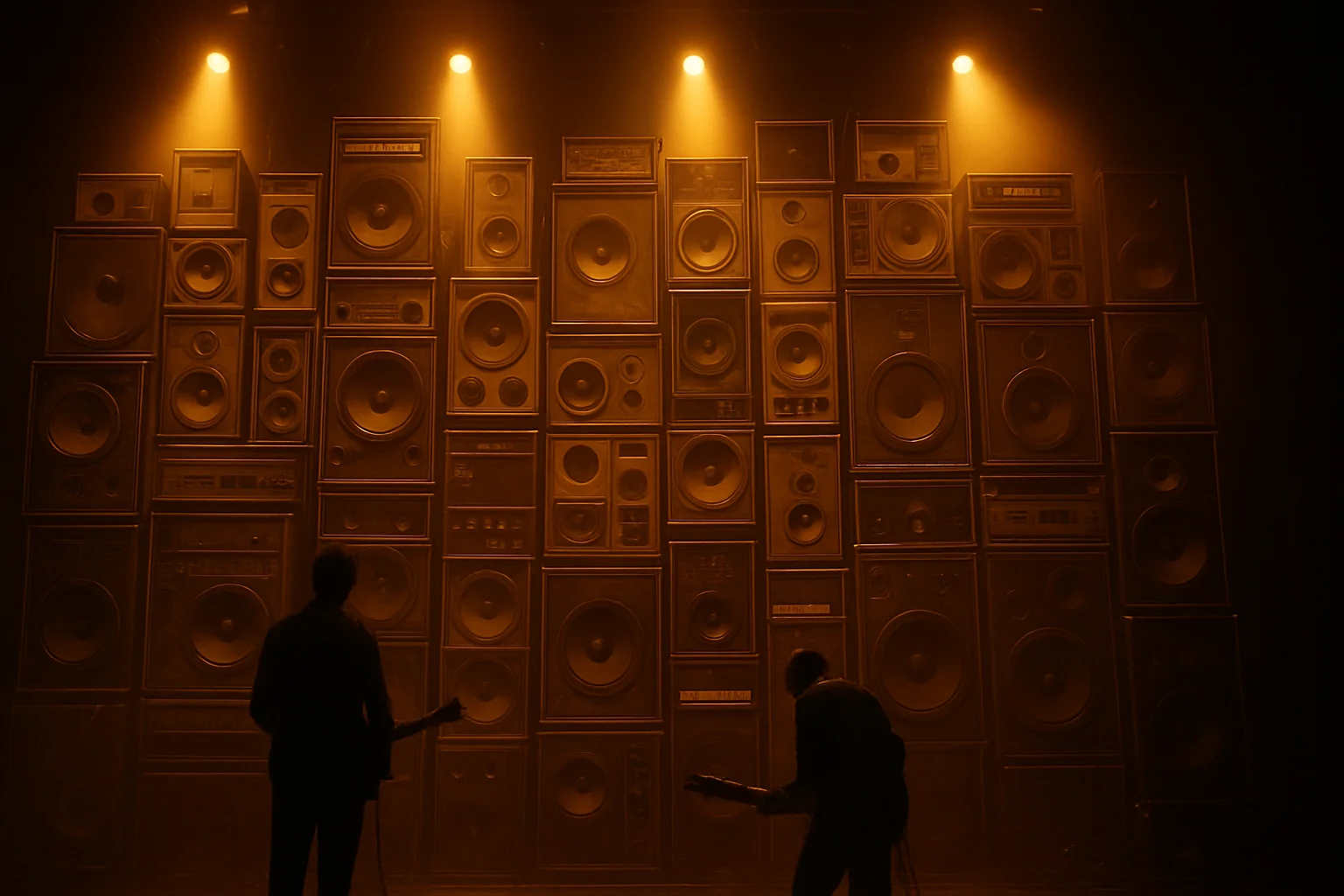
If you’ve ever listened to a song that felt bigger than life—like the instruments were stacked, swirling, and surrounding you from every angle—you’ve already met the Wall of Sound. It’s one of the most iconic ideas in music history, mixing bold creativity with technical genius. And fun twist? The phrase actually refers to two different revolutions: one born in the recording studio, and the other created on the live stage.
Let’s break down how the Wall of Sound came to be, who built it, and why musicians and producers still obsess over it decades later.
Who Developed the Wall of Sound? The Genius Behind the Concept
When people ask who developed the Wall of Sound, the answer points straight to Phil Spector—one of the most influential (and controversial) producers of the 20th century. He didn’t just record music; he sculpted it.
Spector wanted songs to feel huge on radios and jukeboxes, especially in an era when audio gear wasn’t exactly powerful. So he built a production method so massive, so layered, and so bold that it reshaped pop forever.
This is where the Phil Spector Wall of Sound was born.
He famously worked with The Ronettes, The Crystals, The Righteous Brothers, and later The Beatles. His approach became the blueprint for a “cinematic pop” style—long before “cinematic pop” was even a phrase.
How Phil Spector’s Wall of Sound Actually Worked
Spector’s Wall of Sound wasn’t magic—it was meticulous engineering mixed with fearless creativity. Here’s what made it iconic:
1. Layered Instruments Playing the Same Part
Multiple guitars strummed the same chords. Several pianos hit the same melody. An entire string section reinforced a simple riff. Stacked together, these sounds didn’t just blend—they exploded.
2. Massive Reverb Rooms
Spector used echo chambers to make the instruments feel like they were floating in a giant hall. It created depth, warmth, and a dreamy haze that defined his signature style.
3. Minimal Mixing, Maximal Impact
Everything collided into one powerful blend, creating “the Wall”—a dense, emotional wash of sound that felt richer than any one instrument could achieve on its own.
4. Designed for 60s Playback Tech
Spector wasn’t just thinking like a producer. He was thinking like a strategist. His mixes cut through noisy bars, old car radios, and cheap speakers—because they were designed to dominate them.
Modern audio tech builds on many of these principles through tools like DSPs. If you’re curious how sound shaping evolved, check out digital processors explained in this audio guide:
The Grateful Dead Wall of Sound — A Completely Different Beast
Now here’s where things get wild.
In the 1970s, the Grateful Dead introduced another Wall of Sound—but theirs wasn’t in a studio. It was a towering, mind-blowing live sound system, often called the Grateful Dead Wall of Sound.
The Dead’s Version Was a Literal Wall
We’re talking hundreds of speakers, absurd wattage, and a structure so big it looked like a music skyscraper. The band wanted pure, distortion-free audio that could reach tens of thousands of fans.
What Made It Genius?
- Each instrument had its own dedicated speaker stack.
- The clarity was unmatched for its time.
- It shaped the blueprint for the festival sound systems we use today.
While Spector’s version was about emotional impact, the Dead’s Wall of Sound was about technical perfection. Together, these two meanings created a musical legacy with incredible cultural reach.
The Wall of Sound in Modern Music
Even if you’ve never heard a 60s pop record or seen a Dead concert, you’ve definitely heard its influence. Today’s producers still mix:
- stacked vocals
- layered guitars
- atmospheric reverb
- dense arrangements
Pop, indie, shoegaze, dream-pop, cinematic scores—they all borrow from the original concept.
Even your home listening experience has evolved because of it. Smart TVs, soundbars, and home theaters aim to replicate that “full-room” feeling. Here’s a quick look at how modern tech shapes sound today.
Wall of Sound vs. Today’s Audio Technology
Let’s compare the eras:
Then:
- Musicians recorded together in one room
- Layering was manual and analog
- Reverb was generated using physical spaces
- Mixing was wide and blended
Now:
- Producers stack hundreds of digital tracks
- Plugins simulate vintage gear and reverb chambers
- DSPs shape audio with precision
- Every layer can be fine-tuned—no chaos required
The soul of the Wall of Sound still lives in modern production…but now it’s turbocharged.
Why the Wall of Sound Still Matters
Because it changed everything.
It influenced:
- the sound of 60s girl groups
- rock and folk production
- the rise of cinematic pop
- the birth of massive live sound systems
- the language we use to describe music today
Even critics still use the phrase the Wall of Sound to describe any track that feels lush, full, and emotionally charged.
FAQs About the Wall of Sound
What is the Wall of Sound?
A dense, layered audio style created by Phil Spector—and separately a giant live speaker system used by the Grateful Dead.
Who developed the Wall of Sound technique?
Phil Spector developed the original studio Wall of Sound in the early 1960s.
How was the Grateful Dead’s Wall of Sound different?
Spector’s was a recording method. The Dead’s was a massive speaker structure for concerts.
Is the Wall of Sound still used today?
Absolutely. Its layering concepts influence modern pop, indie, cinematic music, and audio engineering.
Was the Wall of Sound a good technique?
It transformed pop forever and still inspires countless producers. It’s considered one of music’s most important innovations.
Final Thoughts
The Wall of Sound isn’t just a style—it’s a cultural moment that reverberated across decades. From Spector’s lush studio experiments to the Grateful Dead’s towering live setup, the idea reshaped how we hear, feel, and experience music.
And honestly? That’s why its legacy will always hit like a tidal wave.