






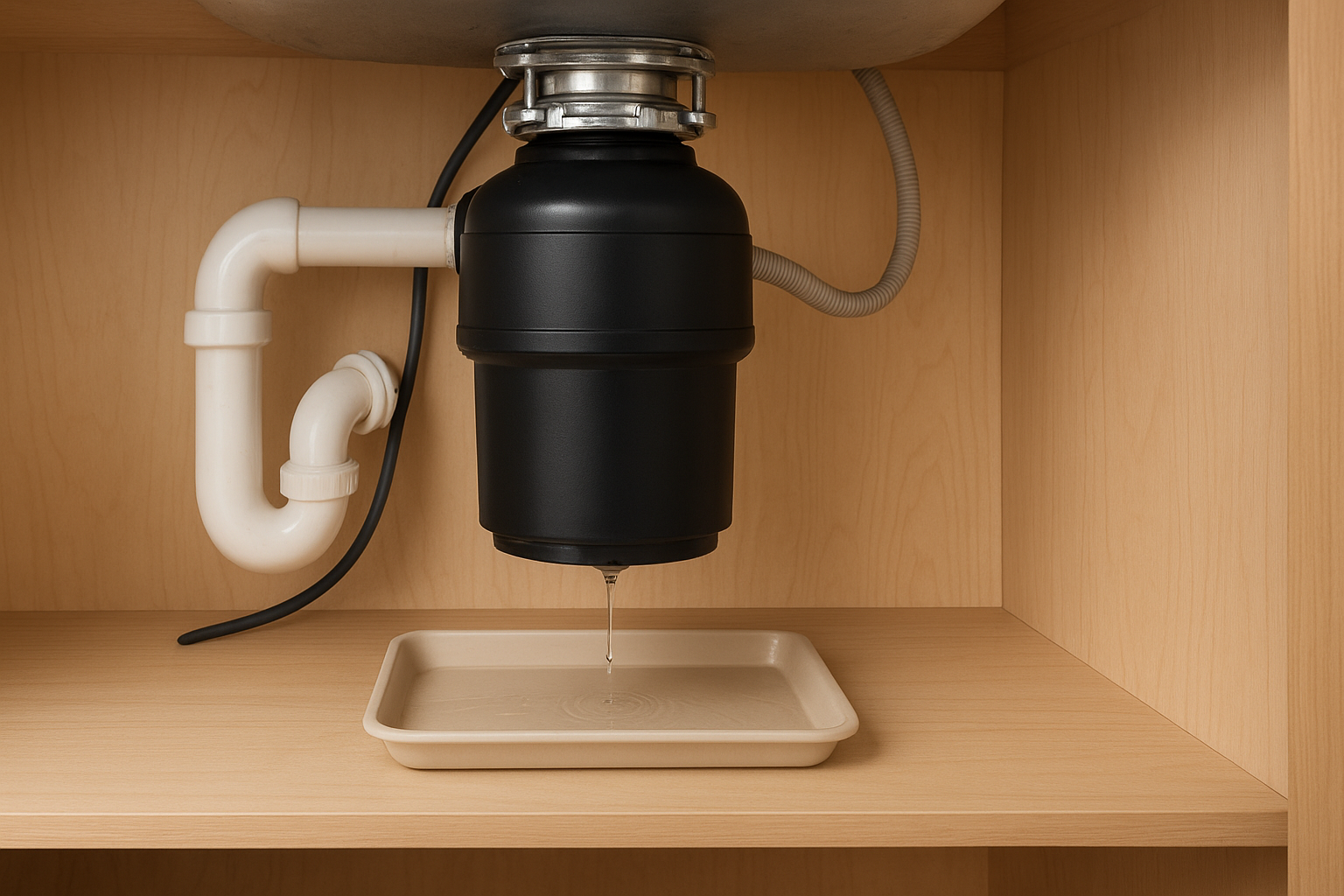
A garbage disposal leaking from bottom is one of those household problems that usually shows up out of nowhere — a damp cabinet, a slow drip, or even a puddle under the sink. While it’s easy to panic, a leak at the bottom of the unit almost always points to a specific set of issues. The good news? Most of these problems can be diagnosed quickly, and some can even be solved without replacing the entire appliance.
This guide breaks down exactly why your garbage disposal is leaking from the bottom, how to tell the severity of the problem, what you can fix yourself, and when it’s time to get a new unit.
What It Means When a Garbage Disposal Is Leaking From the Bottom
If the leak appears directly under the disposal (rather than from the sink flange or discharge tube), it usually means one thing:
The internal seal has failed.
This is different from a sink disposal leaking from the top, which is typically caused by loose mounting hardware or putty issues. Leakage at the bottom signifies that water is escaping from inside the motor chamber — an area that should always remain sealed.
Signs include:
- Water dripping from the lower housing
- Moisture around the reset button
- A wet motor casing
- Continuous dripping even when the disposal isn’t running
- Strong smell if the leak mixes with old food waste
If you’re dealing with a trash disposal leaking from anywhere below the grinding chamber, replacing seals may help, but in many cases, a replacement is more practical.
Common Causes of Leaking From Bottom of Garbage Disposal
Here’s what usually causes this type of leak:
1. Worn-Out Internal Seals
The grinding chamber has rubber seals that prevent water from getting into the motor. Over time, these seals dry out, crack, or rot.
Common in:
Older units, or frequently used disposals.
Badger food disposal leaking?
This is especially common in Badger models because they use basic internal seal designs that wear down after years of use.
2. Cracked Grinding Chamber
If you run the disposal with hard objects — bones, metal, or even dense fruit pits — the chamber can crack.
When water escapes through these cracks, it appears as a leak from the bottom.
3. Motor Housing Damage
Impact, rust, and long-term vibration can damage the lower housing.
You’ll often notice:
- Rust flakes
- Water pooling under the motor
- A slow, persistent drip
Once the motor housing is damaged, repair is rarely worth the cost.
4. Loose or Failed Bottom Cap
Some models have a removable bottom plate or cap near the reset button.
If it loosens or warps, water may seep through.
This is less common but easy to check.
How to Diagnose Where the Leak Is Actually Coming From
Before buying a new unit, you’ll want to be certain the leak is coming from the bottom — not from the connections above.
Here’s a simple test:
- Turn off power (unplug or switch off breaker).
- Dry the entire disposal with towels.
- Place paper towels under the unit for visibility.
- Run water through the sink for 30–60 seconds.
- Check the exact drip point.
- Leak at the top → sink flange issue
- Leak at the side → discharge tube or dishwasher connector
- Leak at the reset button area → bottom housing issue
- Leak from motor casing → internal seal failure
If the leak is specifically from the bottom, repair options become limited.
Can You Fix a Garbage Disposal Leaking From the Bottom?
Short answer: Usually not.
Long answer: Internal seal failures and motor leaks are not DIY-repairable, because the disposal isn’t designed to be opened or resealed.
However, you can try the following before replacing it:
1. Tighten the Bottom Plate (if your model has one)
Some disposals have screws around the bottom housing. Tighten them gently to ensure the plate isn’t loose.
2. Check for Rust Holes
If your unit is visibly rusted or has pinholes, replacement is the only option.
3. Warranty Check
If your disposal is newer (1–7 years), the manufacturer may still cover:
- Seal failure
- Housing cracks
- Motor leaks
Badger models often have a shorter warranty, so check your model number.
When Should You Replace Your Leaking Garbage Disposal?
Replace your unit if:
- The leak comes from the motor or reset button
- The internal seals have failed
- The grinding chamber is cracked
- The unit is over 8–10 years old
- The motor hums, stalls, or sounds strained
- You see rust on the bottom housing
These issues aren’t designed to be repaired.
A moderate leak can quickly turn into:
- Mold in the cabinet
- Electrical shorting
- Wood rot
- Damage to flooring or drywall
If your badger food disposal is leaking, especially from the bottom, replacement is almost always the most efficient and cost-effective solution.
How to Replace a Disposal (Quick Overview)
If you’re comfortable with basic DIY plumbing, replacement takes about 20–40 minutes.
- Turn off power
- Disconnect drain pipe
- Remove the disposal from the mounting ring
- Install the new flange and mounting bracket
- Connect the new unit
- Reconnect the drain and dishwasher lines
- Restore power
- Test for leaks
Modern disposals also have quieter motors, improved seals, and better jam protection.
How to Prevent Your New Disposal From Leaking Again
A few easy habits can prevent future problems:
- Run cold water before and after use
- Avoid fibrous foods (celery, onion skins, corn husks)
- Never grind bones, pits, or metal
- Don’t overfill the chamber
- Clean the disposal monthly with baking soda + vinegar
- Check connections every few months
- Avoid harsh chemical drain cleaners
These steps keep seals healthy and prevent early wear.
Conclusion
A garbage disposal leaking from bottom is almost always a sign of failing internal seals or housing damage — issues that typically require replacement rather than repair. While side or top leaks can be fixed with tightening or sealant, bottom leaks indicate a problem inside the motor chamber.
If your sink disposal leaking persists even after checking top and side connections, replacing the unit is the safest and most practical choice. It prevents cabinet damage, electrical risks, and recurring leaks.
Want the next step — including a step-by-step replacement guide, product suggestions, or a comparison of InSinkErator vs Badger vs Moen models?