






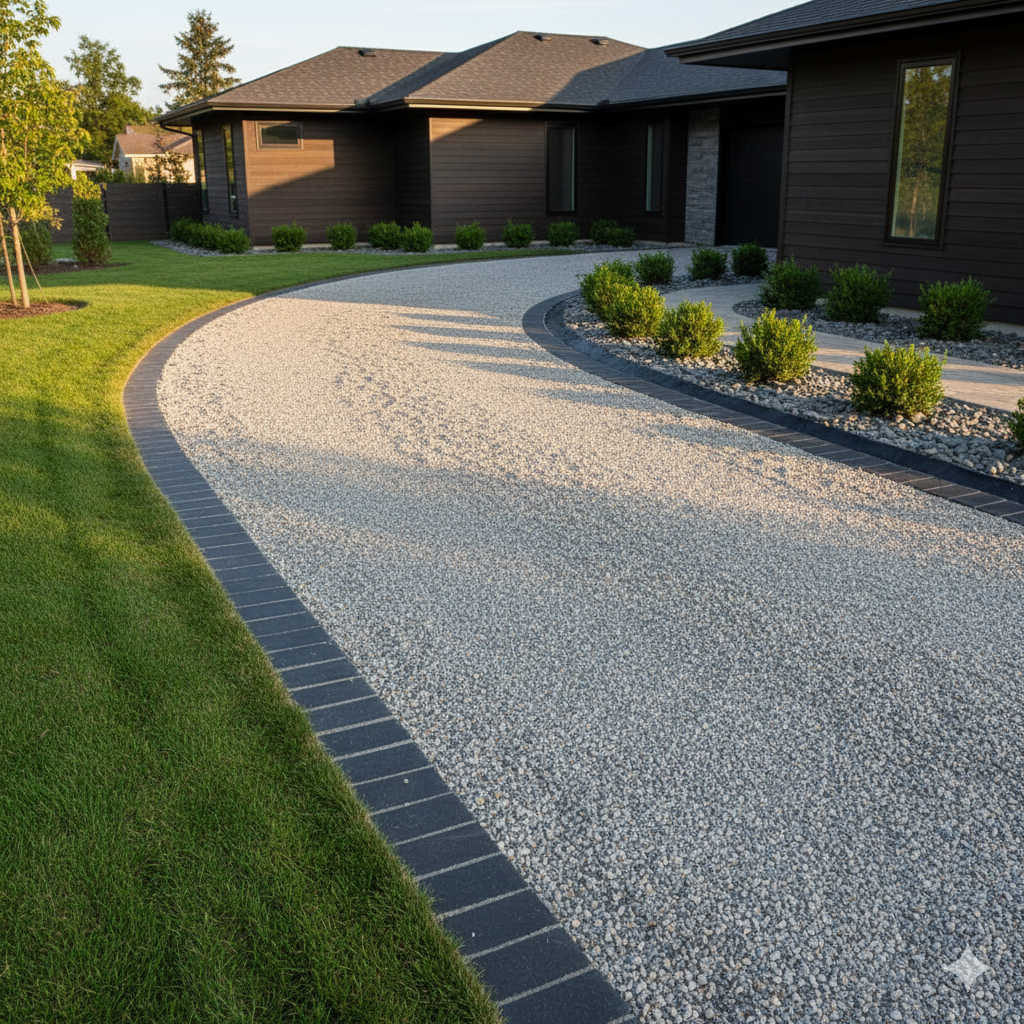
Gravel driveways are a classic choice for homes, offering durability, affordability, and rustic charm. But without proper edging, they can quickly become messy — stones spilling into lawns, uneven borders, and frequent upkeep. That’s where gravel driveways with edging come into play. Edging not only keeps your gravel contained but also transforms the driveway into a polished, well-defined feature of your home. In this guide, we’ll explore materials, design ideas, installation tips, and maintenance strategies to help you achieve a clean, low-maintenance gravel driveway.
Why Edge a Gravel Driveway?
Edging your gravel driveway is more than just an aesthetic choice — it’s a practical necessity for keeping your outdoor space tidy and functional.
- Keeps Gravel Contained: Prevents stones from spreading onto grass, flower beds, or walkways.
- Enhances Curb Appeal: Clearly defined edges make a driveway look professionally finished.
- Protects Landscaping: Separates the driveway from plants, trees, and garden features.
- Reduces Maintenance: Limits gravel loss, reducing the need to frequently replenish or rake.
Well-placed edging acts as a subtle frame, defining your driveway while protecting surrounding landscaping.
Popular Materials for Gravel Driveway Edging
Choosing the right material depends on your home’s style, your budget, and desired durability. Here are common options:
1. Wood
Wood gives a warm, rustic look and is easy to install. Treated timber can last several years, though it may eventually rot in damp climates.
2. Stone or Brick
Stone and brick provide long-lasting, classic borders. Ideal for both straight and curved driveways, they add elegance and durability.
3. Metal or Steel
Metal edging is sleek and modern, offering clean lines and flexibility for curves. Steel is durable and holds gravel firmly in place.
4. Concrete
Concrete is a permanent solution for sharp, defined borders. You can pour it in place or use precast blocks, ensuring stability for years to come.
5. Plastic or Composite
Lightweight and budget-friendly, plastic or composite edging is ideal for DIY projects. It’s easy to shape around curves and requires minimal tools for installation.
For walkways and garden paths, gravel path edging can complement driveway borders for a cohesive outdoor design.
Creative Gravel Driveway Edging Ideas
There’s no one-size-fits-all when it comes to edging a gravel driveway. Consider these ideas:
- Straight Borders: Perfect for contemporary homes, offering a clean, streamlined look.
- Curved Stone or Brick: Adds character and complements garden landscaping.
- Low-Profile Metal Strips: Subtle but effective for modern driveways.
- Raised Timber or Concrete: Creates a defined, dramatic edge for heavy-use areas.
- Mixed Materials: Combining wood and stone can provide a unique aesthetic.
Selecting an edging style that complements your home and landscaping enhances both functionality and visual appeal.
Step-by-Step Installation of Gravel Driveway Edging
Installing edging for a gravel driveway is manageable with some planning and basic tools. Here’s how:
- Measure and Mark the Edges: Use stakes and string to outline the driveway.
- Dig a Shallow Trench: Typically 3–6 inches deep, depending on the material.
- Place Edging Material: Fit each piece snugly in the trench.
- Check Alignment and Level: Ensure straight lines or consistent curves.
- Secure and Backfill: Use soil or gravel to stabilize the edging.
- Add Finishing Gravel: Cover edges neatly to blend borders with the driveway.
Tip: Use stakes, adhesive, or extra gravel to secure materials like plastic or metal, while heavier stone or brick usually requires no additional support.
Maintaining Your Gravel Driveway Edging
Maintenance is key to preserving the function and appearance of your edged gravel driveway:
- Inspect yearly for displaced stones or damage.
- Replenish gravel as needed to maintain even coverage.
- Trim grass, weeds, or plants along edges.
- Check wood, metal, or composite materials for wear, rot, or rust.
Proper upkeep ensures your driveway remains neat, functional, and visually appealing for years.
FAQs About Gravel Driveway Edging
What is the best material for gravel driveway edging?
Stone and concrete are durable and long-lasting. Wood offers rustic charm, while metal works for modern designs.
Can I install gravel driveway edging myself?
Yes! Most homeowners can install edging using basic tools and proper planning.
Do I really need edging for a gravel driveway?
While optional, edging keeps gravel contained, reduces maintenance, and enhances curb appeal.
How much does driveway edging cost?
Costs vary depending on material and driveway size. Stone and concrete are more expensive but offer longevity, while wood or plastic is budget-friendly.
Related Reading
- Enhance your outdoor space by combining driveway design with What Is a Ranch Style Fence — And Why Is It Making a Modern Comeback?.
- Attention to measurement and planning can make projects smoother — see How Long Is a Toilet Paper Roll — And Why the Size Isn’t Always the Same for an example of precision in home projects.
Conclusion
Edging your gravel driveway is a simple upgrade with significant benefits. From keeping gravel in place to boosting curb appeal, the right edging material, design, and installation technique can turn a basic gravel driveway into a polished, low-maintenance feature of your home. With careful planning and proper upkeep, your edged gravel driveway will stay functional and stylish for years to come.